Alyssa Cecchetelli

Alyssa Cecchetelli is a Quality Control Scientist at Addgene. She received her PhD from Northeastern University studying cell signaling and communication in C. elegans. Alyssa is particularly interested in molecular biology, science communication, all NY sports teams and traveling. Follow her on twitter at @ACecchetelli


Blog articles by Alyssa Cecchetelli

Schematic showing that base editing converts the blue fluorescent protein expressing plasmid into one that expresses green fluorescent protein.
SRIRACCHA reporter
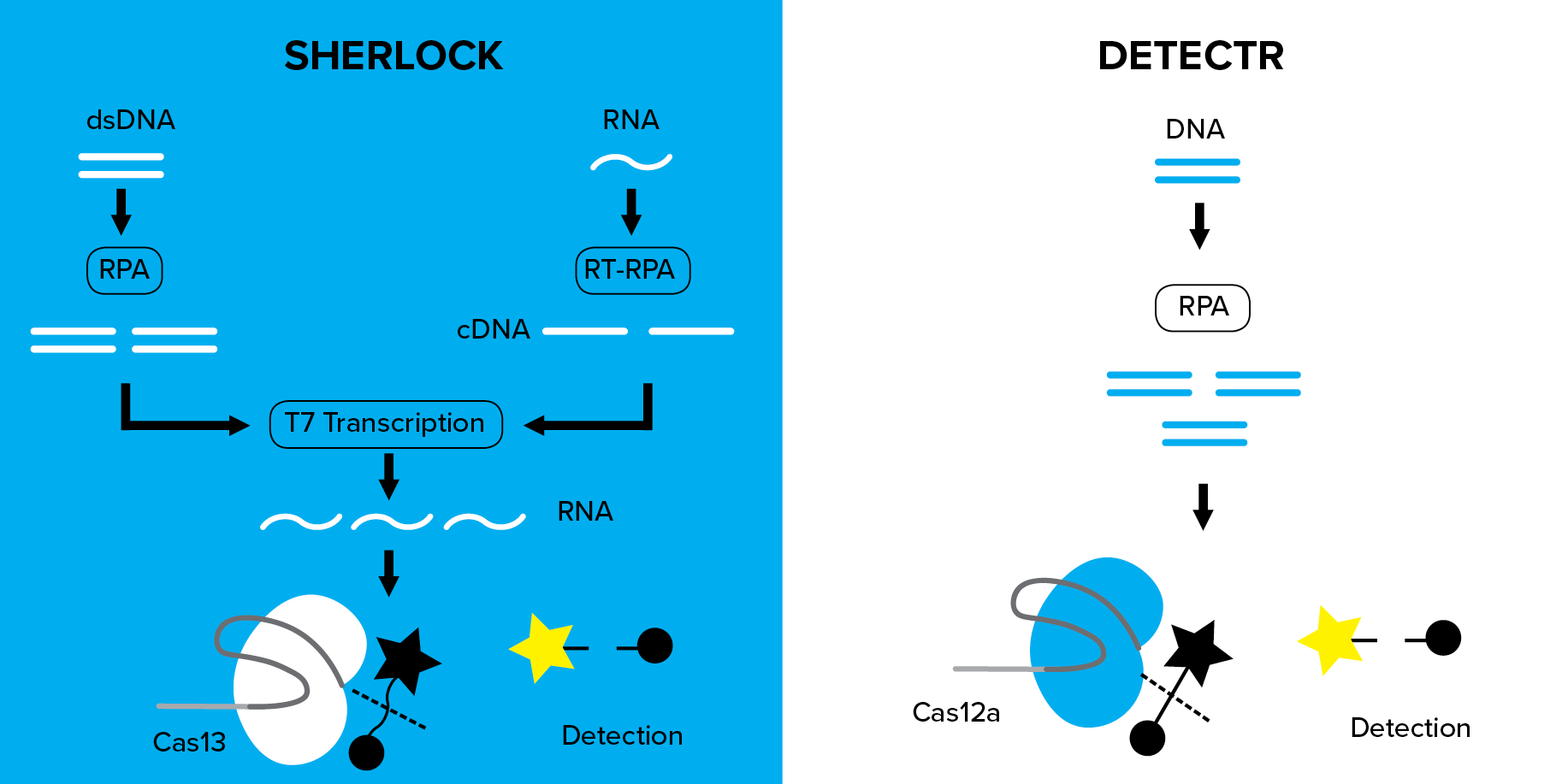
Cartoon depictions of SHERLOCK and DETECTR nucleic acid detection methods.  SHERLOCK can be used to detect dsDNA or RNA. The material is amplified using RPA (for dsDNA, producing more dsDNA) or RT-RPA (for RNA, producing cDNA). Either way, T7 transcription then produces RNA from the amplified material. A target RNA sequence is specifically recognized by Cas13, which then promiscuously cleaves nearby RNA reporters, freeing a fluorescent marker from a linked quencher.  DETECTR is used to detect DNA. The material is amplified using RPA, and a target DNA sequence is specifically recognized by Cas12a, which then promiscuously cleaves nearby ssDNA reporters, freeing a fluorescent marker from a linked quencher.
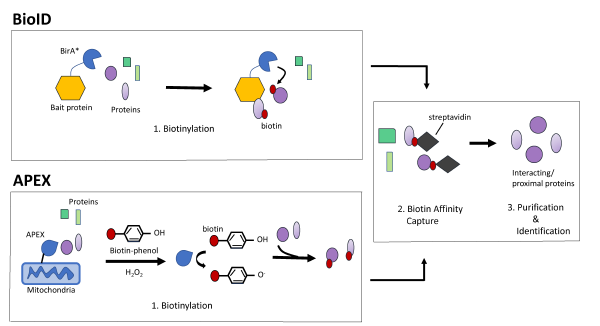
Proximity-labeling-BioID-APEX-comparison
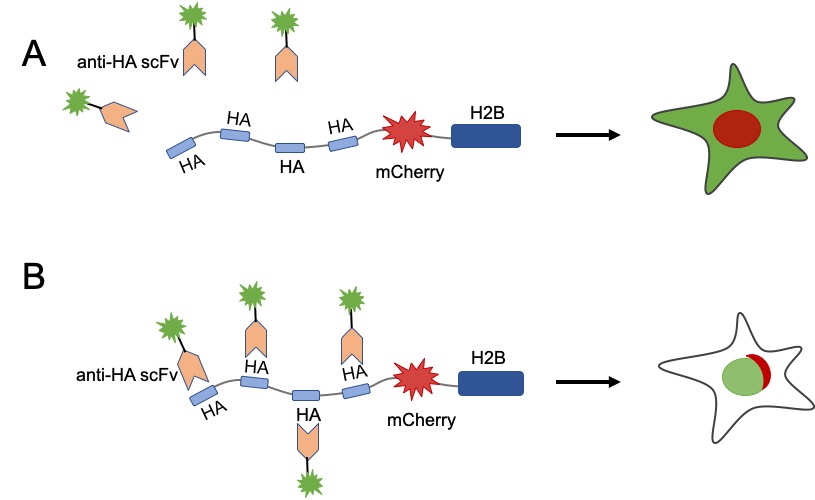
HA frankenbody

Sharing science just got easier... Subscribe to our blog