This post was contributed by Deborah Sweet, Vice President of Editorial at Cell Press. Almost everyone who works in a lab struggles with reproducibility at some point. Usually it comes up when a researcher decides on a new project and begins by trying to reproduce someone else’s ...
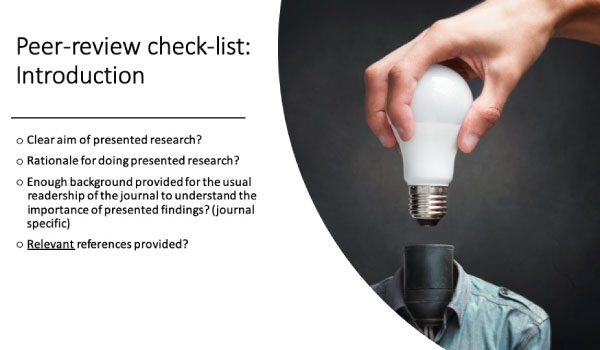
This post was contributed by Magdalena Julkowska, a postdoctoral researcher at KAUST, Saudi Arabia. From the perspective of an author submitting a paper, the peer-review seems like another dragon to slay on the way to publish your work in a scientific journal. The peer-review is ...
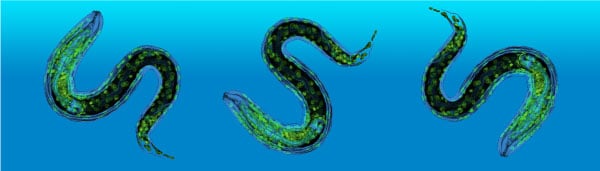
The C. elegans community has always emphasized the need for open science and collaboration. The field already has comprehensive reference pages and curated databases for scientists including Wormbook, Wormatlas and Wormbase. And scientists have been continuously sharing their ...
As a person with many roles and responsibilities, I have to think a lot about how to balance those roles. I’m a father of three, a scientist and science communicator, and I strive to be a volunteer and contribute to my community. This past year, I spent some time thinking about ...
This post was contributed by guest blogger Chinmaya Sadangi, a postdoc at the University of Toronto. The Addictive Brain was founded in early 2018 with the goal of communicating science to non-scientists. Chinmaya Sadangi, a postdoc at the University of Toronto, created The ...
In 2017, Lenny Teytelman, CEO of protocols.io, organized a panel to discuss reproducibility issues in research. But he realized that it wasn’t enough to discuss the age-old problem of irreproducibility in science or even to discuss potential solutions. Despite all the talk, not ...
When Jessica Sacher, a microbiologist from the University of Alberta, saw that scientists were using Twitter to find phages to treat an antibiotic resistant bacterial infection, she shared that tweet with Jan Zheng, a UX designer that she knew. “We had actually met at a lindy ...
Have you ever found yourself frustrated reading through a paper to find that there is insufficient information about which reagents were used? Unambiguous identification of a reagent is crucial for reproducibility because mistakes in this can lead to wasted time or retractions. ...