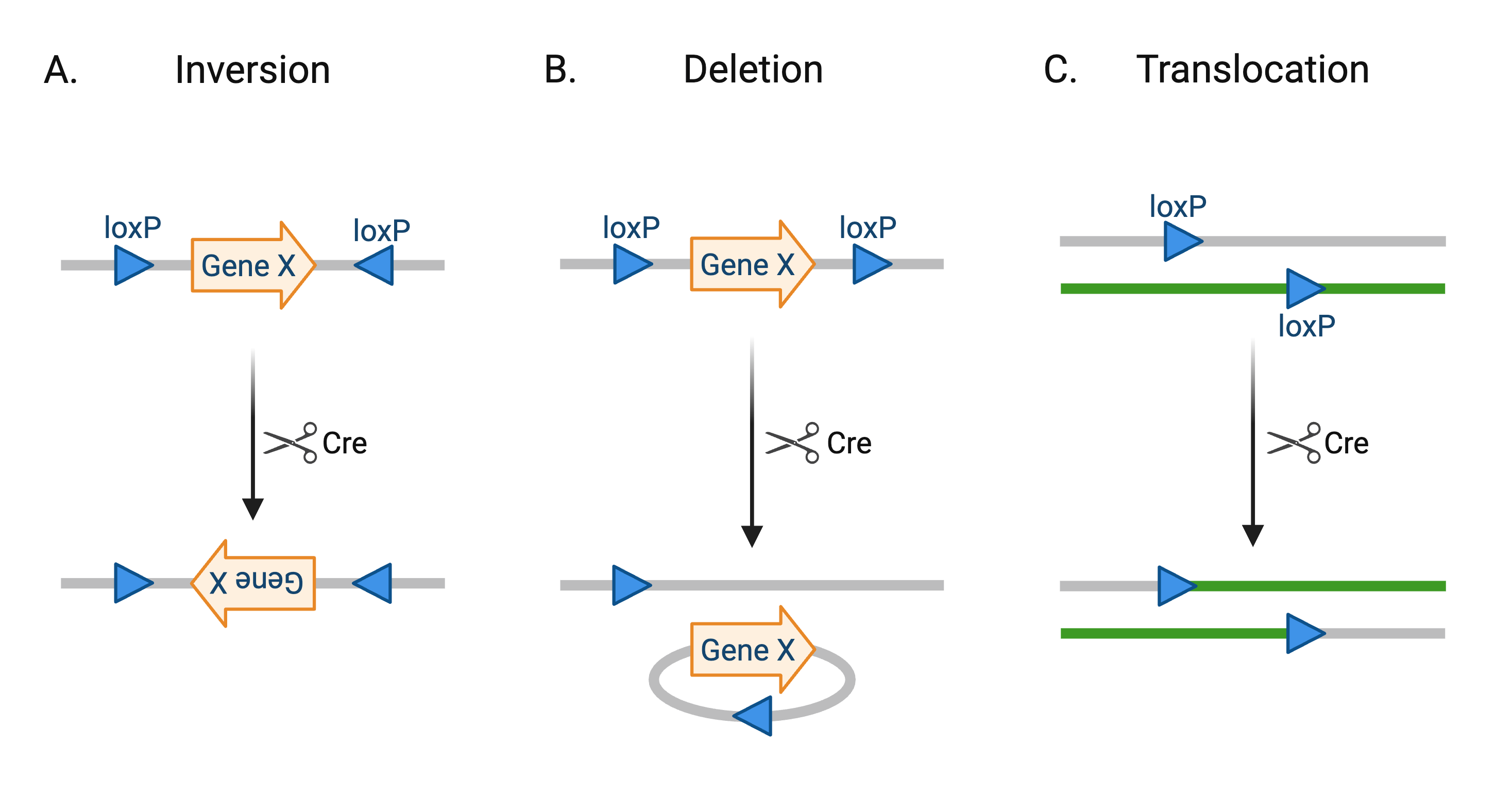
In previous posts for our Plasmids 101 series, we examined a number of important plasmid elements – promoters, origins of replication, protein tags, and antibiotic resistance markers (just to name a few). In this edition, we’re going to take a look at a very interesting tool ...
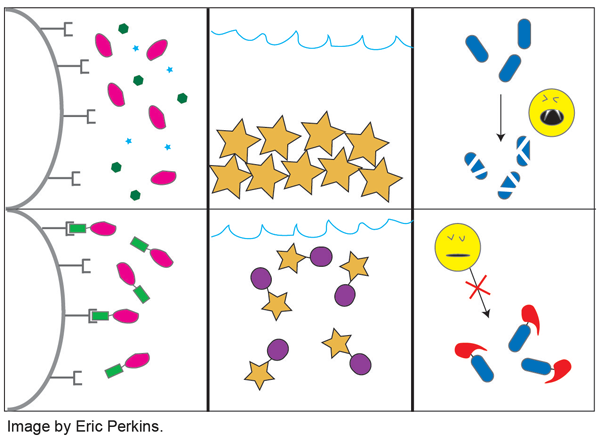
Protein tags are usually smallish peptides incorporated into a translated protein. As depicted in the accompanying cartoon, they have a multitude of uses including (but not limited to) purification, detection, solubilization, localization, or protease protection. Thus far ...
Vectors (or empty backbones) are frequently used in molecular biology to isolate, multiply, or express the insert they carry in the target cell. These vectors allow you to test the function of Your Gene Of Interest (YGOI) in a controlled environment under various conditions. The ...
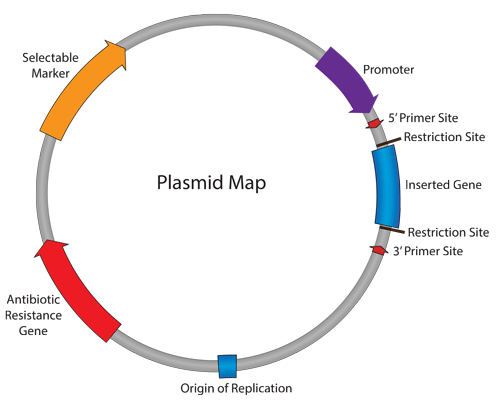
Once you've gotten to know what a plasmid is in general, it's time to take a look at some of its parts. Elements such as the antibiotic resistance gene and the origin of replication are necessary to replicate plasmids and make sure the cells maintains it. Here, we'll cover the ...
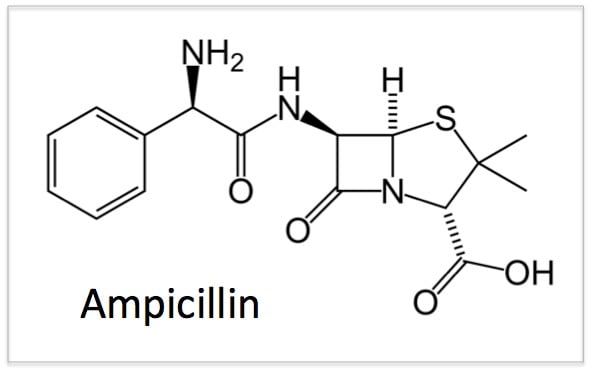
Resistance to antibiotics is a widely used tool in molecular biology, yet scientists rarely stop to think about how much easier it makes our lives. Plasmid transformation into E. coli is a fairly inefficient process– just 1 out of 10,000 cells on average! Without some means of ...