


Every August, the CRISPR community returns to Cold Spring Harbor Laboratory for the Genome Engineering: CRISPR Frontiers conference. This year’s meeting gathered researchers across the field, from the bacteriophage-defense biology that revealed these systems to clinical research using CRISPR in patients.
Fourteen years after the 2012 landmark paper (Jinek et al., 2012) that introduced RNA-programmed Cas9, the field has moved beyond double-strand breaks (DSBs) as its default editing strategy. Researchers are now focused on improving editor precision and stability, inserting whole genes without creating DSBs, RNA sensing to target specific cells, and solving delivery challenges that could bring these tools to the clinic.
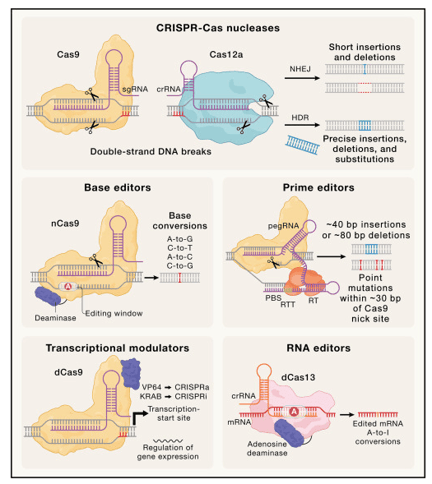 |
| Figure 1: Source: Pacesa M, Pelea O, and Jinek M. "Past, present, and future of CRISPR genome editing technologies.” Cell 187(5):1076–1100 (2024). Used under the Creative Commons Attribution 4.0 (CC BY 4.0) license. |
Addgene shares years of CRISPR community growth and impact
At CRISPR Frontiers, Addgene presented an update on twelve years of CRISPR tool sharing. Our collection now holds >20,000 CRISPR plasmids, deposited by >1,000 labs across 43 countries, and we have distributed >300,000 CRISPR plasmids worldwide. Those plasmids have been cited >30,000 times, a number that keeps climbing as requests turn into publications (Shepard et al., 2026).
Keynote: Rewriting the rules of DNA insertion
Martin Jinek (University of Zürich) delivered the keynote address at this year’s meeting, describing genome editing as progressing through three generations.
The first generation — RNA-guided nucleases such as Cas9 — relies on DSBs and is limited by targeting scope, off-target activity, variable repair outcomes, and genotoxic risk. The second generation — base and prime editors — makes precise changes without breaks, but is constrained to small edits, variable efficiency, bystander edits, and the challenge of delivering large constructs. The third generation — the focus of his talk — aims for programmable insertion: systems that integrate multi-kilobase DNA without DSBs or homology-directed repair (reviewed in Pacesa et al., 2024).
Jinek highlighted two approaches his lab is dissecting. First, ISCro4 bridge recombinase, which uses a bispecific “bridge RNA” that base-pairs with both a genomic target and donor DNA, specifying both substrates for recombination. ISCro4 bridge recombinase supports multi-kilobase excisions, inversions, and donor insertion at endogenous loci in human cells (Pelea et al., 2026).
Second, CRISPR-associated transposases (CASTs), which combine the RNA-guided functionality of a CRISPR system with the autonomous DNA insertion capabilities of a transposase. Using cryo-EM, they characterized the type I-F CAST system activity and mechanism, showing that R-loop formation induces conformational changes that stabilize the target DNA and enable TnsC oligomerization, which in turn recruits the TnsA-TnsB transposase (Finocchio et al., 2026). He closed on the practical caveat that these enzymes are large, and delivery remains challenging.
Transposases and programmable large-DNA integration
CASTs are moving from curiosity to tool because we now better understand the molecular mechanism controlling CAST insertion, which is the first step toward reliable programmable integration.
Simon Eitzinger (Harvard University, Liu lab) led with an engineering-first approach to evoCAST. Using data from pooled lentiviral screens of thousands of crRNA spacers per locus, his team identified improved evoCAST spacers and developed a predictive model to identify high-activity spacers at new loci. They also mapped transposon-end rules that govern evoCAST integration and sequence preferences. Then they used these findings to optimize evoCAST donor architecture and significantly improve integration across a variety of human cell lines and loci (Witte et al., 2025).
Shirin Fatma (St. Jude Children’s Research Hospital, Kellogg lab) asked why type I-F3 CASTs are so accurate. Her cryo-EM structures of the VchCAST holo integration complex show that integration is gated by sequential conformational "licensing" steps: R-loop formation licenses TnsC to oligomerize, which recruits the TnsA-TnsB transposase, and only the fully assembled complex becomes catalytically active. Partially matched sites never arm the machinery, explaining the system’s high on-target fidelity (Fatma et al., 2026).
Together, these talks traced an efficiency trajectory: from roughly 0.1% integration for early type V-K systems such as ShCAST and HELIX, to about 5% for type I-F PseCAST, and up to 10–30% for the evolved evoCAST, a range where therapeutic applications become plausible.
Cas12a2: Turning RNA sensing into programmable cell killing
One of the meeting’s most compelling threads followed a single enzyme from mechanism to potential therapy: Cas12a2. Unlike Cas12, Cas12a2 is activated by single-stranded RNA and, upon target recognition, opens its RuvC active site to unleash broad collateral nuclease activity that can kill the cell. Ryan Jackson (Utah State University) laid out the molecular basis: with elegant steady-state kinetic experiments using a fluorophore-quencher substrate as well as supercoiled pUC19, he showed that Cas12a2 preferentially cleaves dsDNA over ssDNA or RNA. Structural studies revealed how PFS stabilizes the ‘active’ conformation of REC1 and activates Cas12a2 (Bravo et al., 2023).
Jared Thompson (University of Utah) translated that mechanism into function. In mammalian cells, recognition of a target transcript triggers massive collateral DNA damage, mitotic catastrophe, and cell death, with single-nucleotide specificity and no detectable off-target activation. His group used this system to enrich prime-edited cells and to selectively eliminate HPV‑positive cells and cells bearing the oncogenic KRAS G12C mutation (Scholz et al., 2026).
Jingkun Zeng (University of California, Berkeley, and Gladstone Institutes; Doudna lab) pushed the idea toward therapy under the banner of “chromatin shredding,” programming Cas12a2 against disease-specific transcripts such as cancer neojunctions (EGFR ΔE746–A750), the TP53 R248Q mutation, and latent HIV reservoirs to selectively kill otherwise undruggable cells (Zeng et al., 2026). Plasmids from this study are available at Addgene here.
Sequence-programmable cell elimination is a fundamentally different modality from editing: it trades precise repair for targeted ablation. These intertwined talks made a persuasive case that Cas12a2 could become a new therapeutic strategy where selective cell killing is the goal.
Base editing, prime editing, and variant effect mapping
If programmable insertion is the frontier, the second-generation editors, base and prime editors, are the field’s workhorses. The common thread: directed evolution, structural insight, and machine learning are now used together to push editors’ performance and applicability.
Allen Tao (Harvard University, Liu lab) addressed the cost of directed evolution: reverse transcriptases were evolved for prime-editing activity, but stability and expression eroded. Using structure-informed, AI-guided redesign that preserved catalytic regions, they restabilized these enzymes into PE8 prime editors, which improved in vivo lipid-nanoparticle (LNP) editing by up to 2.9-fold over PE6 and PE7 (Tao et al., 2026; plasmids at Addgene).
Alexis Komor (University of California, San Diego) revisited adenine base editors from first principles, reverting and re-testing each of the 14 mutations in ABE7.10 to ask which mattered. Finding that results in mammalian cells diverged sharply from those in bacterial cells, her lab went on to do a round of directed evolution in mammalian cells. With a single round, they were able to match and/or surpass ABE8e activity with a narrower editing window (Evanoff et al., 2026; plasmids at Addgene).
The meeting also highlighted the use of editing to read the genome at scale. Lea Starita (University of Washington) and Shawn Fayer (University of Washington) presented saturation-editing maps that reclassify variants of unknown significance (VUSs). Fayer's iPSC approach phenotyped 1,452 MYBPC3 variants in cardiomyocytes and reclassified 67% of the VUSs in the assayed regions. Jason Moffat (The Hospital for Sick Children) mapped approximately 89,000 genetic interactions and traced a TAFAZZIN-ABHD18 suppressor that rescues Barth syndrome phenotypes in cellular and animal models.
Together, these advances tighten the loop from precise editing to functional interpretation and therapeutic validation.
The delivery bottleneck: The challenge that keeps coming up
Jinek flagged delivery in the keynote, and it surfaced again and again throughout the meeting, as an active engineering frontier that may ultimately determine which tools reach patients.
Xiaona Lu (Yale University School of Medicine, Jiang lab) presented STEP‑RNP, a ~12–14 nm nonviral particle that delivered Cas9 ribonucleoprotein (RNP) across the primate brain and produced broad UBE3A reactivation in an Angelman model, outperforming published anti-sense oligos (ASO) benchmarks (Lu et al., 2025). Alžběta Ressnerová (Innovative Genomics Institute, Wilson lab) described PERCEPT, an evolved peptide platform that reached skeletal muscle, airway epithelium, and neurons and knocked down toxic huntingtin in a Huntington’s model, showing peptide carriers can span tissues previously thought difficult to access.
Lipid nanoparticles are also maturing for heavy lifting: Ana Cristian (Broad Institute, Liu lab) systematically optimized prime-editing LNPs — from RNA quality control to formulation tweaks — that yielded high liver editing efficiency and therapeutic benefit in a PKU model (Jiang et al., 2026). Virus‑like particles (VLPs) are becoming more modular and potent too. Mandi Sun (Arc Institute, Gilbert lab) presented a modular VLP that can swap between a nuclease, a base editor, and an epigenetic silencer without re-engineering. Aditya Raguram (Whitehead Institute) made VLPs 2- to 9-fold more potent by engineering the producer cell.
Delivery’s ultimate test is the clinic, and Kiran Musunuru (University of Pennsylvania) gave a reflective talk on what that means in practice. He was involved with the first bespoke base-editing therapy, given to an infant known as baby KJ, who was born with a severe urea-cycle disorder. Dr. Musunuru drew on this experience, discussing how we need to weigh the hard trade-offs on one-off experimental treatments: patient risk against disease severity. His presentation brought up questions of how the field can move from heroic single-patient efforts toward durable, one-dose platforms that could reach many more people. It drew some of the meeting's liveliest discussions, much of it on ethics and the road ahead.
Where the field is going
A few throughlines emerged. Large-DNA insertion is now the frontier: CASTs and recombinases are moving from mechanism to double-digit efficiencies, offering a break-free path to large, defined edits. RNA sensing has become an effector modality: Cas12a2 turns transcript recognition into programmable cell death. Optimization has become a multi-tool effort: directed evolution, structural insights, and machine learning are combined to boost precision, stability, and targeting reach for base and prime editors. Interpretation of VUSs is catching up; saturation mutagenesis and in vivo screens are turning editors into instruments for functional readout. Delivery is making progress across non-viral RNPs, improved LNPs, and modular VLPs, helping bridge the gap between promising genome-editing tools and real-world therapies.
Much of this progress depends on researchers sharing the tools behind their results. If you presented at the 2026 CRISPR Frontiers conference, or have CRISPR tools that could benefit the broader community, please consider depositing them with Addgene to help accelerate research and discovery.
References & Resources
References
- Bravo, J. P. K., Hallmark, T., Naegle, B., Beisel, C. L., Jackson, R. N., & Taylor, D. W. (2023). RNA targeting unleashes indiscriminate nuclease activity of CRISPR–Cas12a2. Nature, 613(7944), 582–587. https://doi.org/10.1038/s41586-022-05560-w
- Evanoff, M., Korpal, S., Krill, Z. D., Cowan, Q. T., & Komor, A. C. (2026). Precise, minimally evolved adenine base editors generated through mutation reversion analysis. Nature Biotechnology. Advance online publication. https://doi.org/10.1038/s41587-026-03045-z
- Fatma, S., Dubey, S., Truong, V., Park, S. G., Wallace, H., Florez Ariza, A. J., King, I., & Kellogg, E. H. (2026). Structure of the Type I-F3 CAST holo integration complex reveals licensing mechanisms during RNA-guided DNA integration [Preprint]. bioRxiv. https://doi.org/10.64898/2026.07.01.735701
- Finocchio, G., Oberli, S., Lampe, G., Schmitz, M., Sternberg, S. H., & Jinek, M. (2026). Structural basis of RNA-guided DNA integration by Type I CRISPR-associated transposases [Preprint]. bioRxiv. https://doi.org/10.64898/2026.05.18.725949
- Jiang, A. Y., Cristian, A., Brooks, D. L., Feierman, E. R., Chen, P. Z., Whittaker, M. N., Pierce, S. E., Sakai, H. A., Chen, H., Liu, D., Randolph, P. B., Li, A. H., Hsu, A., Omo-Lamai, S. O., Tao, Y. A., Owusu-Amo, B., Wang, X., Wang, X., Musunuru, K., & Liu, D. R. (2026). Efficient prime editing in vivo and in vitro using lipid nanoparticles. Nature Nanotechnology. Advance online publication. https://doi.org/10.1038/s41565-026-02200-6
- Jinek, M., Chylinski, K., Fonfara, I., Hauer, M., Doudna, J. A., & Charpentier, E. (2012). A programmable dual-RNA–guided DNA endonuclease in adaptive bacterial immunity. Science, 337(6096), 816–821. https://doi.org/10.1126/science.1225829
- Lu, X., Berent, A., Panagoulias, J., Zhou, J., & Jiang, Y.-H. (2025). Brain-wide non-viral genome editing for Angelman syndrome using STEP-RNP delivery in non-human primates [Preprint]. bioRxiv. https://doi.org/10.1101/2025.11.13.684643
- Pacesa, M., Pelea, O., & Jinek, M. (2024). Past, present, and future of CRISPR genome editing technologies. Cell, 187(5), 1076–1100. https://doi.org/10.1016/j.cell.2024.01.042
- Pelea, O., Tálas, A., Carrera, J. F., Mathis, N., van de Venn, L., Yeh, C. D., Kulcsár, P. I., Marquart, K. F., Weber, Y., Gerecke, S. E., Harvey-Seutcheu, I. F., Mailänder, D., Pfleiderer, M. M., Chanez, C., Corn, J. E., Schwank, G., & Jinek, M. (2026). Programmable genome editing in human cells using RNA-guided bridge recombinases. Science. Advance online publication. https://doi.org/10.1126/science.adz1884
- Scholz, P., Thompson, J., Crosby, K. T., Fauth, T., Krah, N. M., Schlauderaff, G., Back, R., Berkheimer, Z. A., Jolley, A., Sombroek, D., Medert, R., Zurek, C., Dmytrenko, O., Wilson, E., Schut, F. T., Rutter, J., Zhang, X., Krohn, M., Jackson, R. N., . . . Liu, Y. (2026). RNA-triggered cell killing with CRISPR–Cas12a2. Nature. Advance online publication. https://doi.org/10.1038/s41586-026-10466-y
- Shepard, A., Minones-Moyano, E., Mork, C., Pyhtila, B., & Barrangou, R. (2026). The Diversifying Distribution Trends of Maturing CRISPR Technologies by Addgene. The CRISPR Journal, 25731599261470096. https://doi.org/10.1177/25731599261470096
- Tao, Y. A., Sakai, H. A., Jiang, A. Y., Krasnow, N. A., Vaganov, V. S., Shim, B., Barsdale, Z., Pandey, S., Ahmed, N., Na, M., Liao, T.-W., Oye, K., Cristian, A., Zhang, E., Xu, J. A., Bulcaen, M., & Liu, D. R. (2026). AI-guided redesign of laboratory-evolved reverse transcriptases enhances prime editing. Nature Biotechnology. Advance online publication. https://doi.org/10.1038/s41587-026-03149-6
- Witte, I. P., Lampe, G. D., Eitzinger, S., Miller, S. M., Berríos, K. N., McElroy, A. N., King, R. T., Stringham, O. G., Gelsinger, D. R., Vo, P. L. H., Chen, A. T., Tolar, J., Osborn, M. J., Sternberg, S. H., & Liu, D. R. (2025). Programmable gene insertion in human cells with a laboratory-evolved CRISPR-associated transposase. Science, 388(6748), eadt5199. https://doi.org/10.1126/science.adt5199
- Zeng, J., Cheng, Z., Chen, H., Wang, Z., Thompson, J., Crosby, K. T., Han, H., Singhal, A., Ngo, W., Xia, C., Rosas-Rivera, D., Zhang, Z., Kang, M. H., Mao, Y., Diolaiti, M. E., Lee, G. C., Diffley, J. F. X., Song, Y., Qiu, L., . . . Doudna, J. A. (2026). Targeting cancer-specific mutations with RNA-triggered chromatin shredding. Nature. Advance online publication. https://doi.org/10.1038/s41586-026-10738-7



Leave a Comment