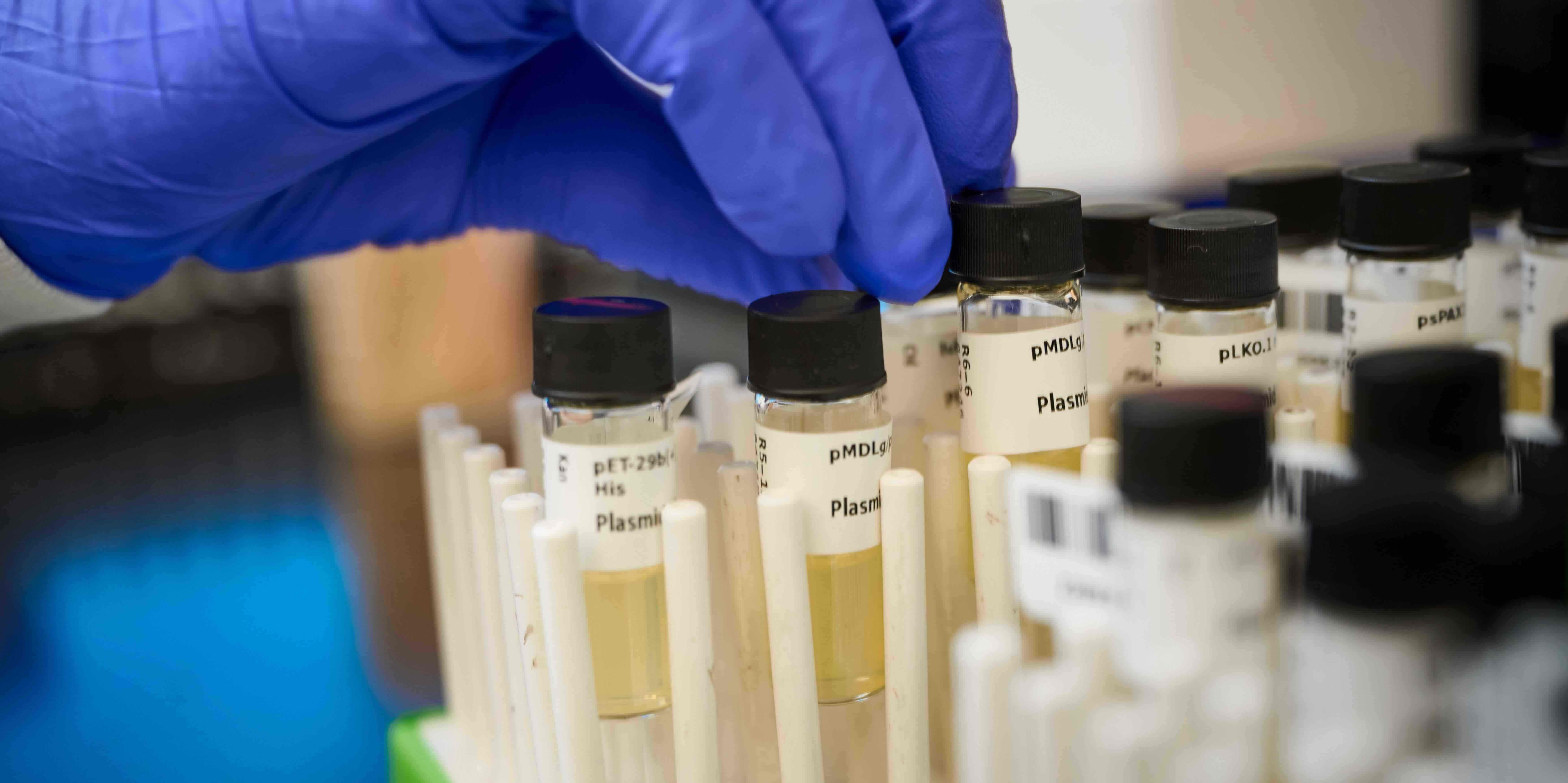
Few lab routines are as commonplace — or as patience-testing — as DNA preps. For most labs, getting plasmid DNA still means streaking plates, growing an overnight culture, performing a miniprep, and checking concentration and quality. Researchers can spend a few days (or ...
If you came to Addgene looking for a plasmid sequence and ran into a login request instead, we understand why that’s frustrating. You knew exactly what you needed, and now there’s one more step between you and the information you’re looking for. We didn’t add this step to slow ...
As co-founder Melina Fan, PhD, transitions to Chief Scientific Advisor, we reflect on the problem she set out to solve 20 years ago, the community she helped build, and where she and Addgene go next.
Check us out! This week Addgene rolled out our new brand identity, and we’re feeling sharp. We’re so excited to show you what we’ve been working on.
As 2025 closed, we received a request that perfectly embodies why Addgene exists: a researcher in Laos needed a unique set of plasmids to advance their research. Thanks to five different labs across the U.S. who deposited their plasmids with Addgene to share with the rest of the ...
Throughout its 20-year history, Addgene’s mission has been to empower scientists to advance discoveries by reducing barriers, facilitating access to high-quality research materials, tools, and resources, while also fostering scientific collaboration. The first request through ...
We all know the timeline for publishing research papers can be long and unpredictable. Fortunately, you can submit plasmids at any point in that process and we provide an option to keep your deposit on hold from public access until the article is published. This policy gives us ...
The recent sweeping cuts to science funding, limitations to facilities and indirect costs, and increased tariffs present an unprecedented challenge to the scientific research ecosystem, not just in the United States but around the world. As an organization that directly ...