This post was contributed by guest blogger Jon Chow, an immunology PhD student at Harvard University. Do you have a gene of interest but have run into a wall trying to study it? It happens. Is it an evolutionarily conserved gene? Can you find an ortholog in the Drosophila ...
Originally published Oct 11, 2016 and last updated Dec 22, 2020 by Benoit Giquel. CRISPR has taken the genome engineering world by storm owing to its ease of use and utility in a wide variety of organisms. While much of current CRISPR research focuses on its potential ...
Two hybrid systems were developed in Saccharomyces cerevisiae in 1989 and are still used extensively to screen for molecular interactions in the cell, including protein-protein, protein-DNA and protein-RNA interactions. The 1980s saw a flurry of discovery in the field of ...
As previous blogs have noted, plants are an important foundation for life on Earth. Selective breeding methods have shaped the plants that we grow and eat, and genetic engineering will continue to improve plant nutrition, yield, and pest resistance. Much of plant genetic ...
The following post was contributed by Derek Jacoby from Makerspace Victoria, CA Over the decades science has become increasingly restricted to academic and industrial labs, but recently there has been a counter movement by the public to access basic equipment and to become ...
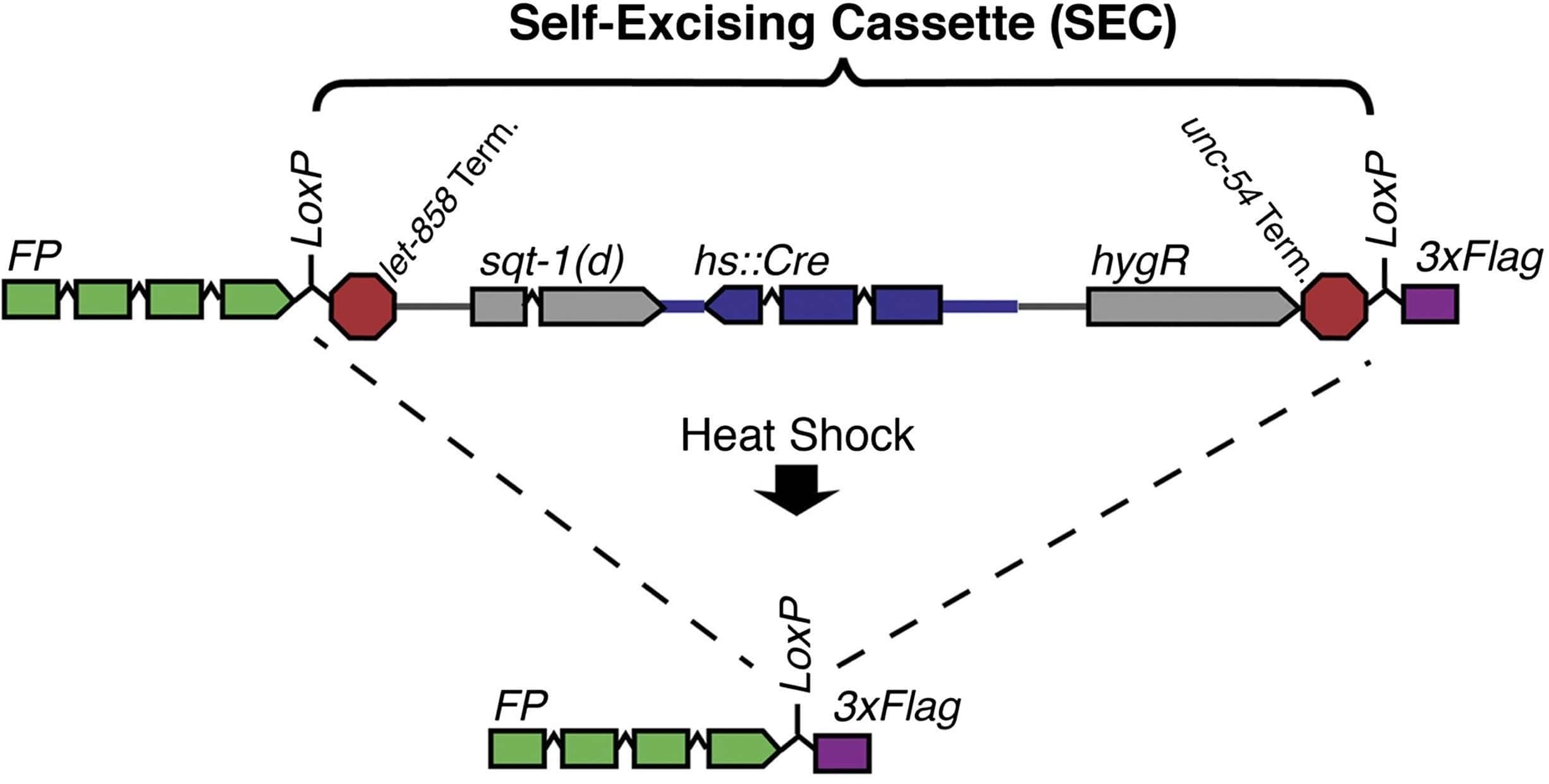
In the summer of 2013, a remarkable nine papers describing CRISPR/Cas9 genome engineering methods for C. elegans were released, signaling a new era in C. elegans research. Homology directed repair (HDR), which enables insertion of custom genomic modifications, is very robust in ...
Cre-lox recombination is an incredibly useful molecular biology tool, but like any biological system, it has certain drawbacks. First, the efficiency of Cre recombination varies for different constructs and cell types. Second, Cre may induce recombination at pseudo- or cryptic ...
This post was contributed by Nikolai Braun and Keira Havens, co-founders of Revolution Bioengineering. Read their previous blog post about how they started their company here. The first transgenic plant was engineered over 30 years ago, but plant synthetic biology is still in ...