Who doesn’t love a library? A traditional library might contain thousands or millions of different books. Addgene’s pooled libraries are a little different: each is a collection of plasmids that share the same backbone and differ only in a small region. This makes them useful ...
Addgene’s viral vector services allow scientists to conduct experiments faster, skipping the preparation steps of production, purification, and titering. Our newest viral vector service, AAV Packaged on Request has seen a fantastic response from the research community. Customers ...
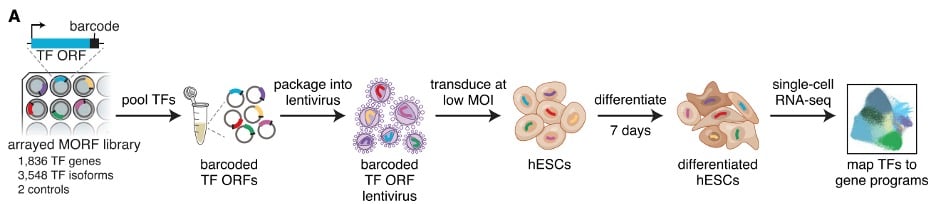
Transcription factors (TFs) act as the gate keepers for gene expression, turning transcription on and off by binding proximal to their target genes. Since gene expression patterns determine everything from stem cell differentiation fate to tumor suppression (and most everything ...
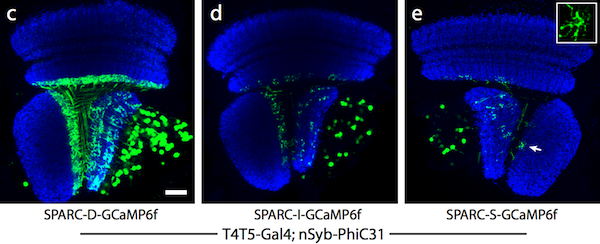
Until recently, there were no completely genetic tools that would allow researchers to label just a fraction of a single genetically-defined subset of cells. By labeling fewer cells in a population, it’s easier to visualize individual/non-overlapping cells. While transgenic ...
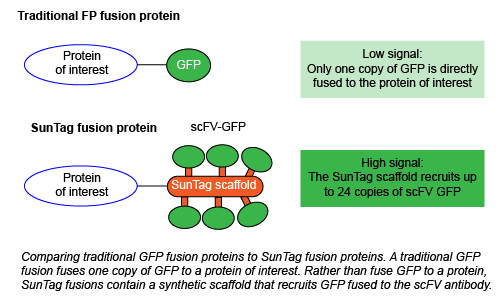
In biology as in life, more is often better. More transcription factor binding sites in a promoter lead to higher transcriptional activation. Multiple nuclear localization signals (NLS) increase protein import into the nucleus. In developing their SunTag technology, the Vale and ...
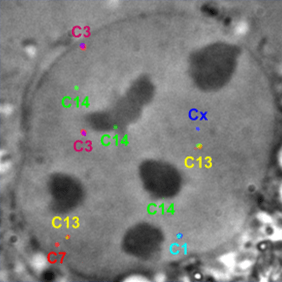
Colorful CRISPR technologies are helping researchers visualize the genome and its organization within the nucleus, also called the 4D nucleome. Visualizing specific loci has historically been difficult, as techniques like fluorescent in situ hybridization (FISH) and chromosome ...
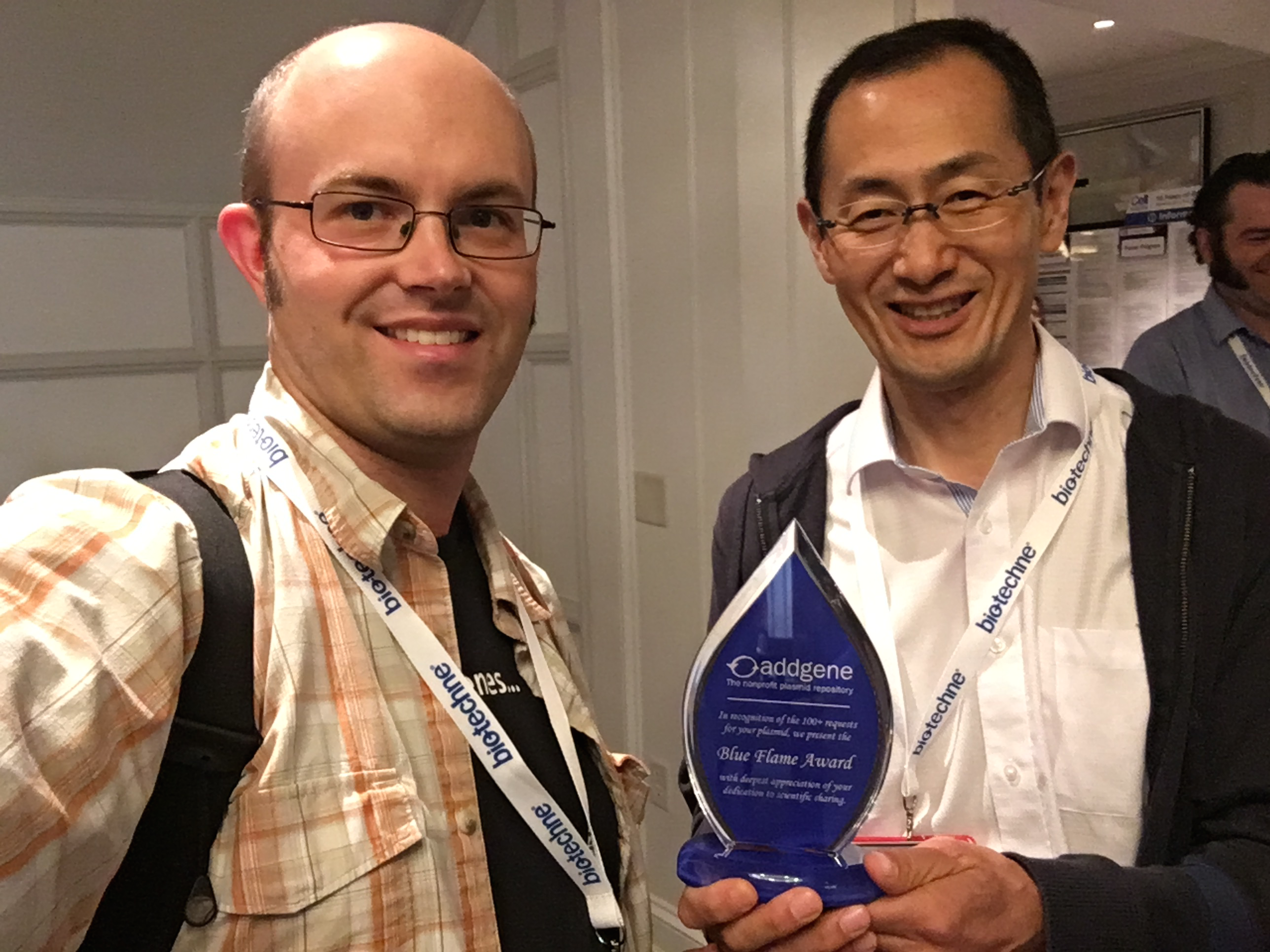
When our Director of Biology, Lianna Swanson, suggested that I might be able to attend the 10 Years of iPSCs Symposium earlier this year, I jumped at the chance. Here was an opportunity to see Shinya Yamanaka celebrate the tenth anniversary of his landmark Cell paper showing ...
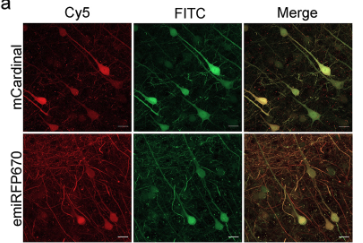
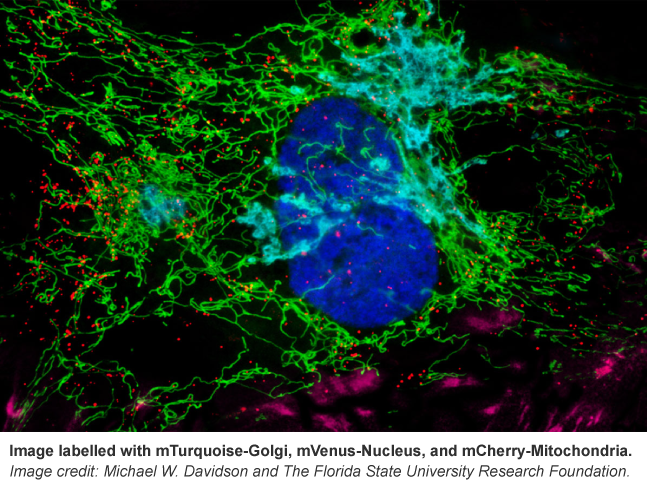
Updated May 10, 2021. In the world of fluorescent proteins and their use for imaging cell biology, Michael Davidson’s lab at Florida State University has been the go-to place. In 2012, his National High Magnetic Field Lab worked with an impressive 1,350 scientists from more than ...