Mice are a common model organism used to understand mammalian traits and genetically engineered mouse models provide researchers with useful and adaptable tools to perform basic and preclinical research. For scientists new to using mouse models, the possibilities may seem ...
In this heyday of molecular biology, many scientists do a lot of DNA work but never get to actually manipulate the organism they study (unless if you count normal human interaction for all of us studying human genes in test tubes and gels). As a freshman in college I studied ...
By Alyssa Cecchetelli and Lukas Morgan Model organisms are vital tools used by researchers around the globe. These organisms share many genes with humans, are easily maintained in the lab, and have short generation times that make it easy to study the effects of genetic ...
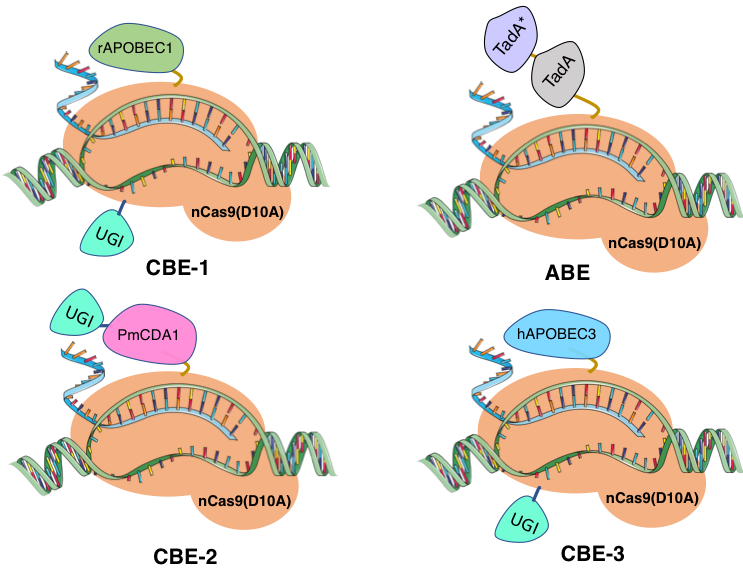
This post was contributed by Kutubuddin Molla, a Fulbright Visiting Scholar at the Pennsylvania State University. Imagine you are dealing with a defective gene, Xm, the sequence of which is identical to the correct gene, Xw, except for a single base. If you heard about CRISPR, ...
This post was contributed by Laura Lee, a graduate student at Stanford University. Arabidopsis is a fantastic model organism for many reasons, not the least of which is ease of transformation. There are many motivations to generate transgenic Arabidopsis, from studying ...
This post was contributed by guest blogger Courtney Price, the Education & Outreach Specialist for the Arabidopsis Biological Resource Center and the Center for Applied Plant Sciences at The Ohio State University. Established in 1991, the Arabidopsis Biological Resource ...
This post was contributed by guest blogger Jon Chow, an immunology PhD student at Harvard University. In my previous two posts, I’ve described the fundamentals of how to work with Drosophila as an experimental model organism. I then described the Gal4/UAS system used by ...
This post was contributed by guest blogger Jon Chow, an immunology PhD student at Harvard University. In this second post in our quick guide to working with Drosophila, you’ll learn how to maniupate expression of your favorite gene (YFG) in flies. Read the first post here. Once ...