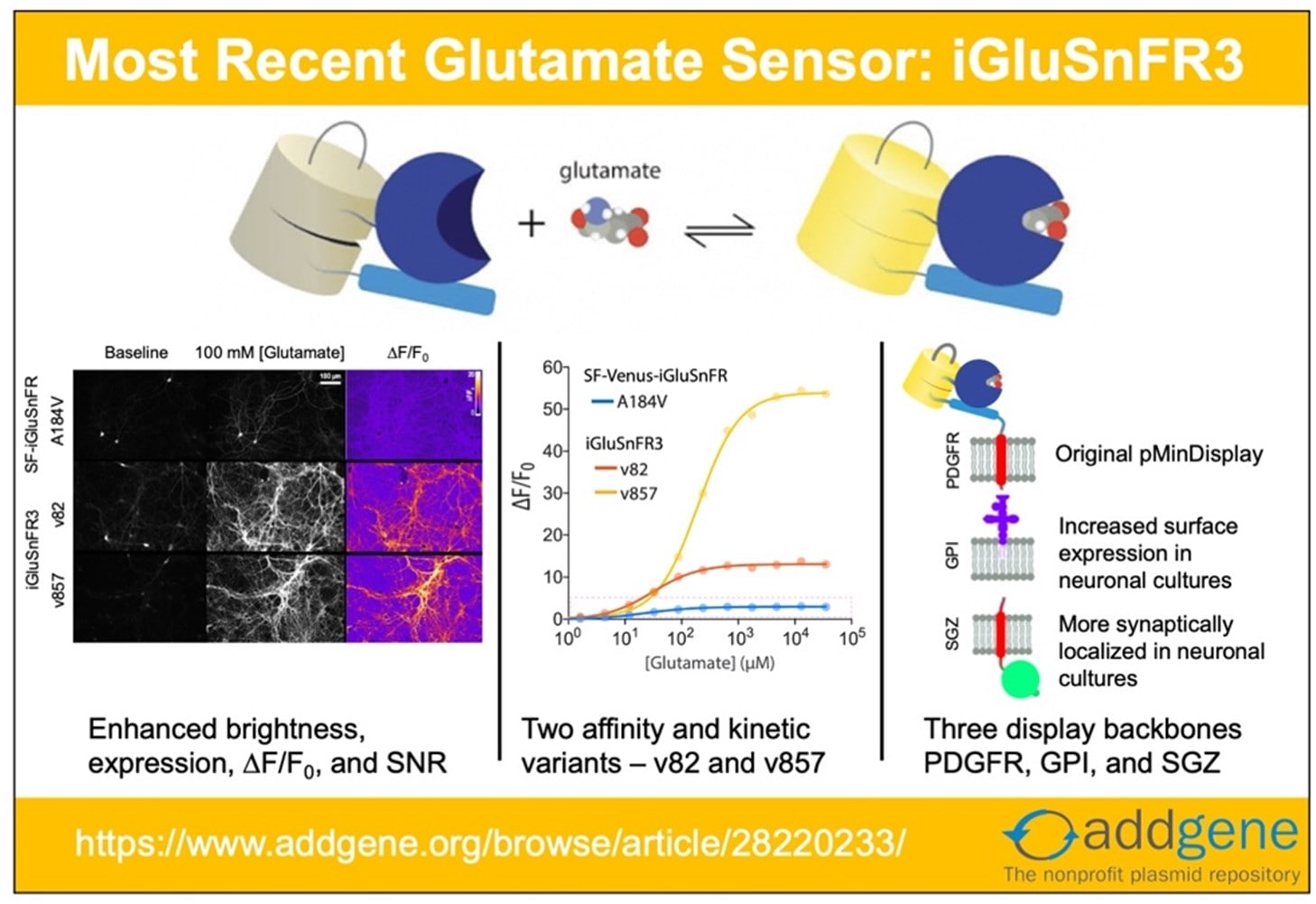
This post was originally written by Tyler Ford in 2018. It was updated by guest blogger Abhi Aggarwal in 2022. Recent updates to iGluSnFR and SF-iGluSnFR have made it clear that it’s time to update our iGluSnFR post! Here, we look at the origins of the system and explore ...
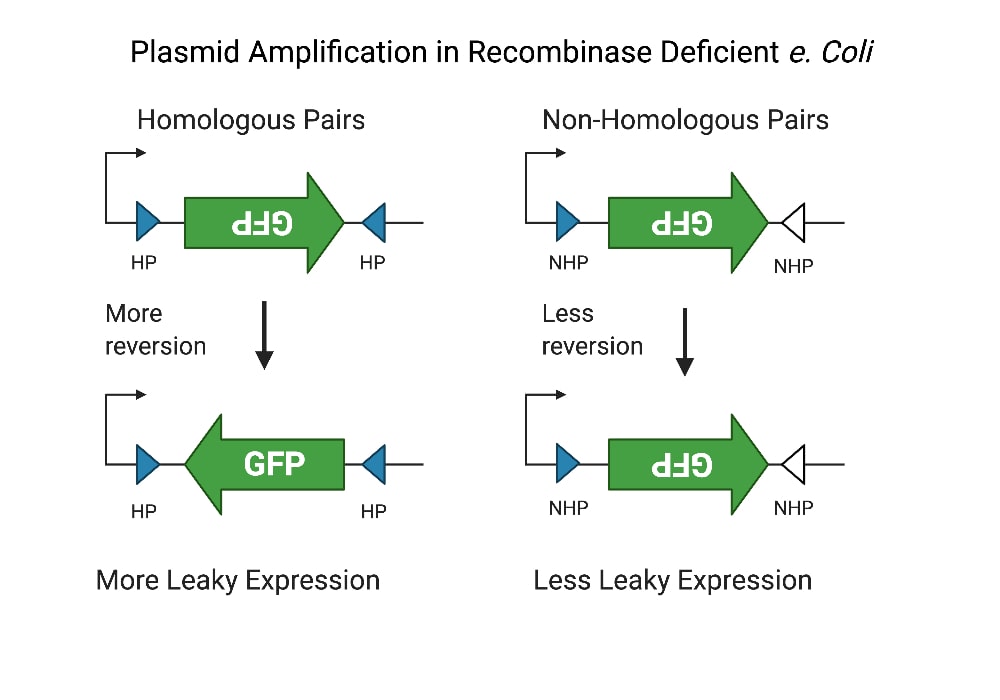
Many neuroscience experiments that require gene expression in a specific cell type rely on transgenic models that express recombinases like Cre or Flp in their cells of interest and recombinase-dependent AAV vectors for selective transgene expression. While this is a powerful ...
Originally published Sep 30, 2014 and last updated Dec 10, 2020 by Benoit Giquel. Adenoviral vectors (AdVs) have been used for many years for in vivo delivery and gene therapy and represent one of the most studied viruses. Adenoviruses are non-enveloped double-strand DNA viruses ...
Your next cool experiment requires some AAV. Where do you start? Plasmids of course! You just need three plasmids to start making the AAVs you need for your experiment: the packaging plasmid which contains the AAV structural and packaging genes, the adenoviral helper plasmid ...
Adeno-associated virus (AAV) has many features which make it a great viral vector, but its packaging capacity is limited to ~4.7kb, or roughly half the packaging limits of lentiviral and adenoviral vectors. While many transgene will fit within this limit, some like prime ...
So you have this awesome experiment you want to do, but it requires some AAV. You’ve never worked with AAV before, but you aren’t going to let that stop you. Where do you start? Turns out like all good experiments, making AAV starts with some plasmids. You just need three ...
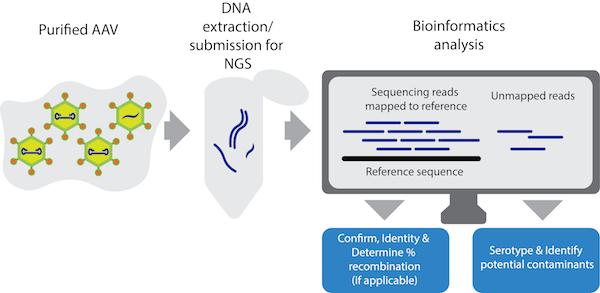
One of the main tenets of our quality control (QC) mantra is to do our utmost to ensure that scientists are receiving the exact materials that they think they are. To address this, several years ago we partnered with Seqwell to establish a next-generation sequencing (NGS) QC ...
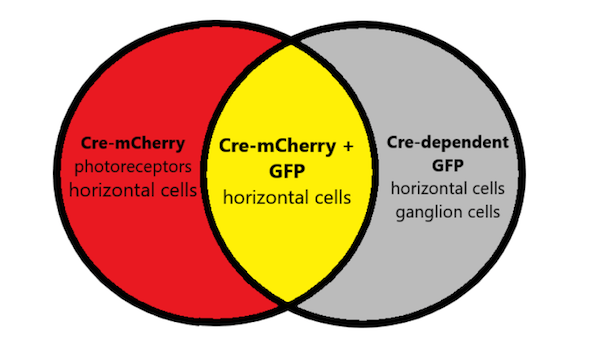
Adeno-associated virus (AAV) is a popular tool for gene delivery, but it has a drawback: how do you ensure your gene goes where you want it to? Knowing that a gene is expressed in a particular cell type is important not only for translational research, such as gene therapy, but ...