This post was contributed by Kyle Hooper at Promega. Researchers have been sharing plasmids ever since there were plasmids to share. Back when I was in the lab, if you read a paper and saw an interesting construct you wished to use, you could either make it yourself or you could ...
Imagine being able to determine whether two proteins are within 10 nanometers of each other, or measure the tension in the helical structure of spider silk, or the activity of a protein in a synapse. What kinds of tools enable us to measure these properties, and what fascinating ...
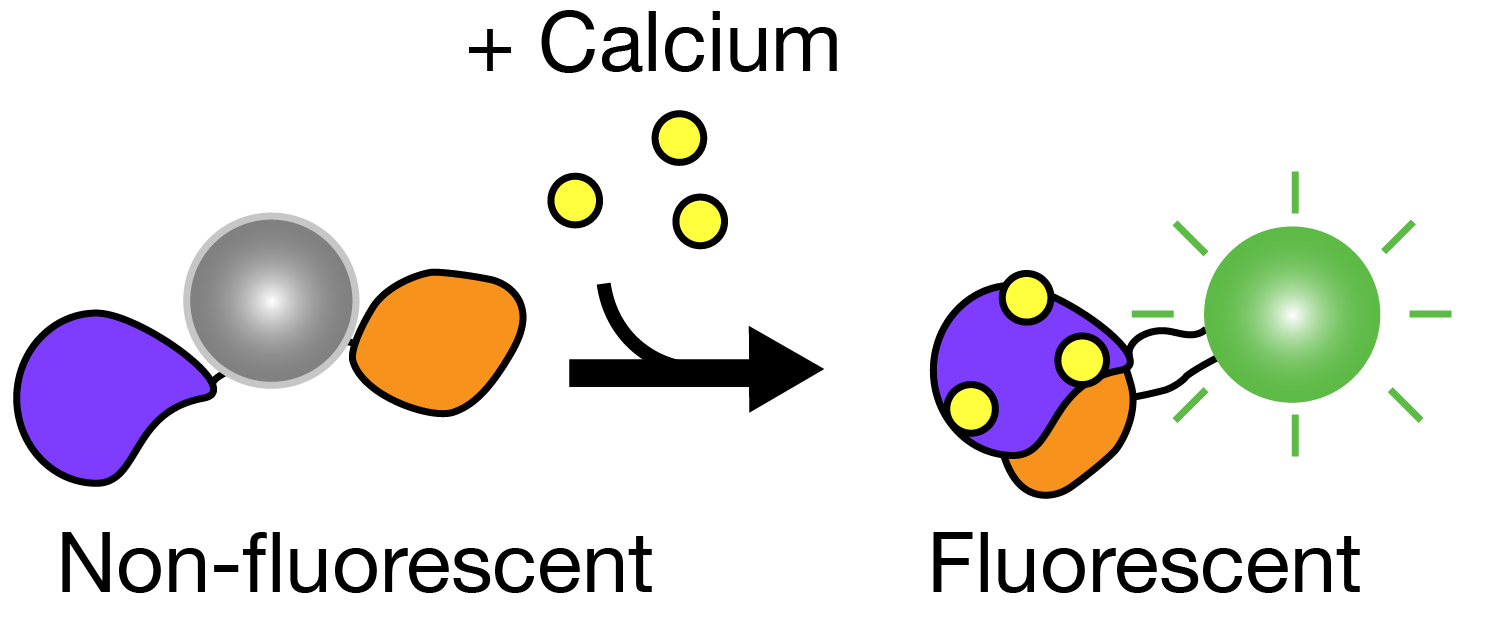
Addgenie Mary Gearing contributed to the content of this article. Biosensors (‘biological sensors’) are biological tools that monitor a process or detect a given molecule. The sensor component is usually a protein that undergoes a conformational change in response to the ...
Rosella is a pH-sensitive fluorescent biosensor that was recently deposited with Addgene by Dr. Mark Prescott. This system was developed for monitoring and analyzing autophagy of cytosol and organelles in yeast cells. Autophagy (Greek for “self-eating”) is induced by a lack of ...
This post was contributed by guest blogger James D. Fessenden, an Assistant Professor at Brigham and Women’s Hospital. Biochemists often struggle to understand how a protein of interest actually behaves. How large is it? What parts of it move when you feed it substrate or add an ...
Epigenetics has recently been hitting the headlines, with sotires like the potential devastation of the palm oil industry through epigenetic effects on the Cover of Nature. So what is epigenetics and what tools are available to study it?
The first time I heard about FRET during a journal club, my guitarist brain automatically thought about the raised element found on the neck of my guitar...not really useful for a biologist you would say. The student was of course talking about the now well-known FRET, aka ...
Oliver Griesbeck of the Max Planck Institute for Neurobiology has been working on genetically encoded indicators of calcium and other small molecules since the very beginnings of the field. Those engineered sensors were designed to replace synthetic calcium dyes, which had been ...