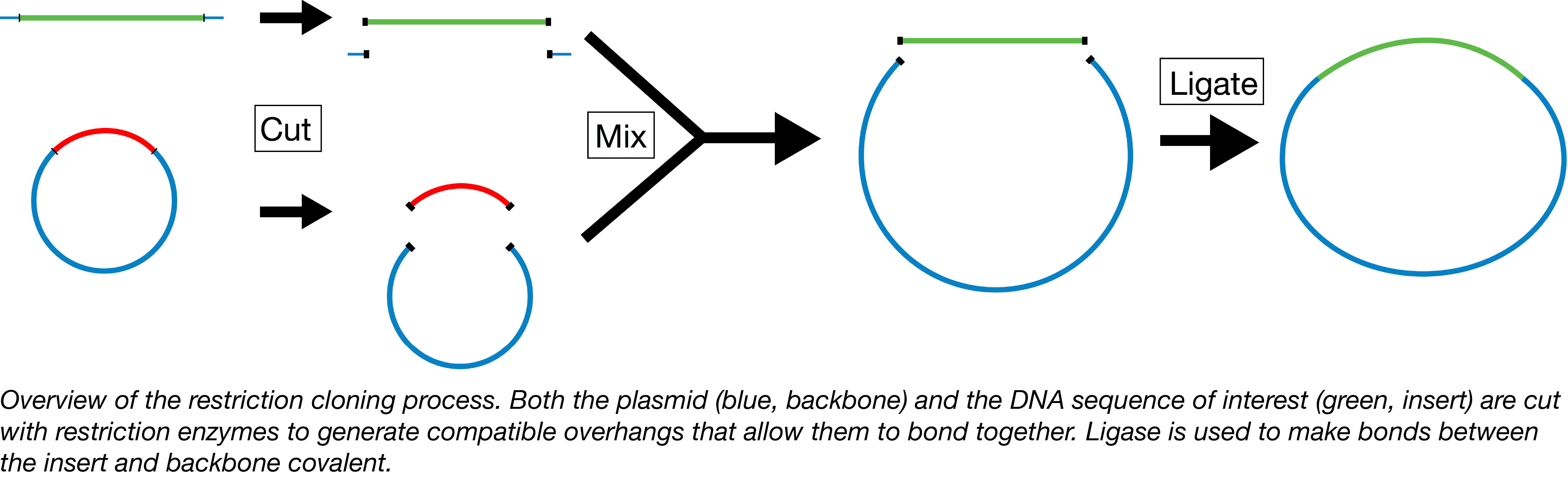
When cloning by restriction digest and ligation, you use restriction enzymes to cut open a plasmid (backbone) and insert a linear fragment of DNA (insert) that has been cut by compatible restriction enzymes. An enzyme, DNA ligase, then covalently binds the plasmid to the new ...
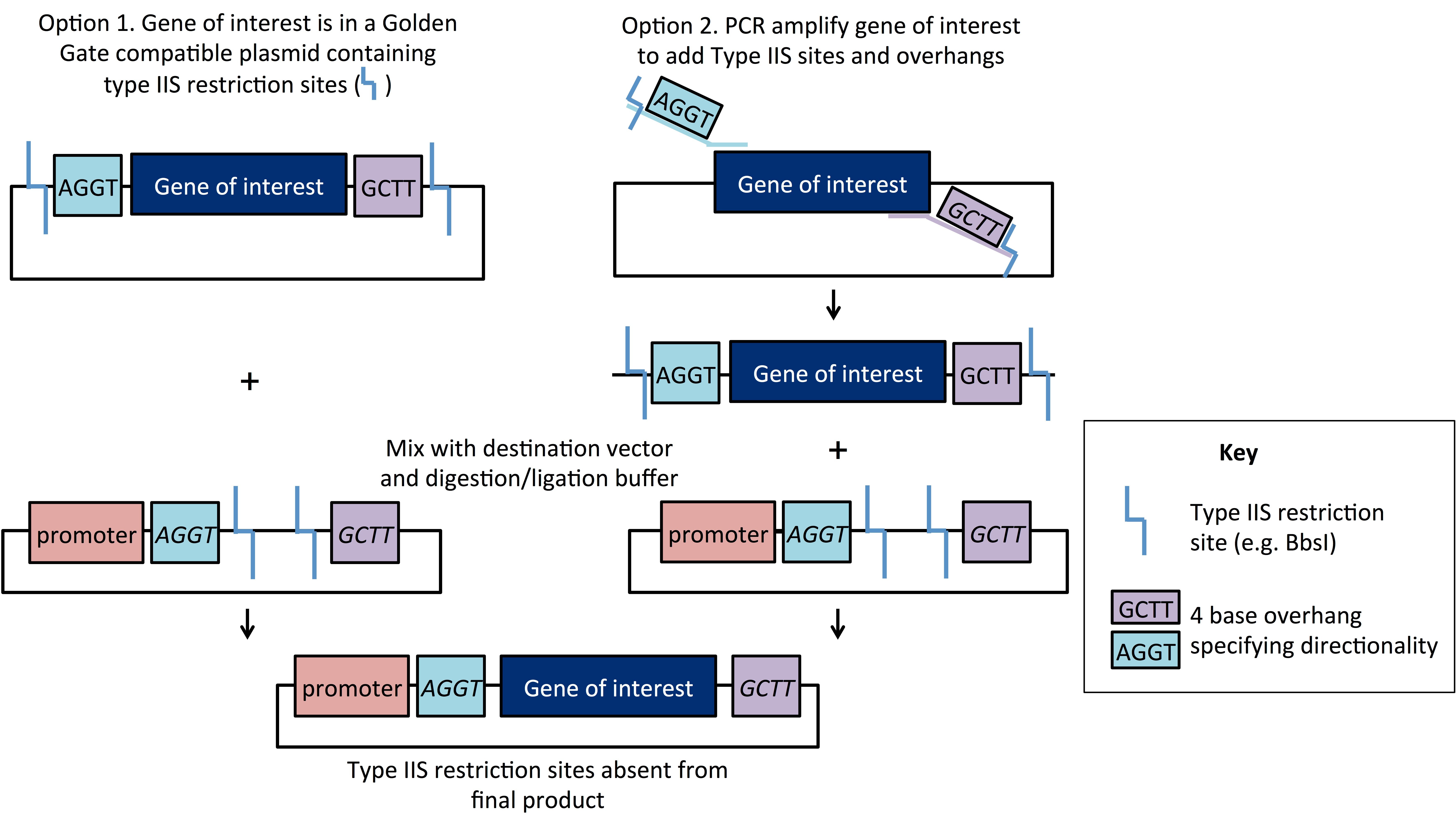
Addgene’s plasmids are used with a wide variety of restriction enzyme-based cloning methods. Each method has its own pluses and minuses, but Golden Gate cloning has been especially useful within both the synthetic biology and genome engineering fields. We’ll walk you through how ...
Nicola Patron is Head of Synthetic Biology at the Sainsbury Laboratory, where she often feels more like an engineer than a biologist. Their focus at the lab is on plant-pathogen interactions, and her aim is to produce constructs and edit genomes so as to make plants, and ...
A few years ago, researchers introduced what’s been called a major breakthrough in cloning technology with the Golden Gate method. For the first time, it was possible to quickly and efficiently assemble a large number of building blocks with just two or three inexpensive ...